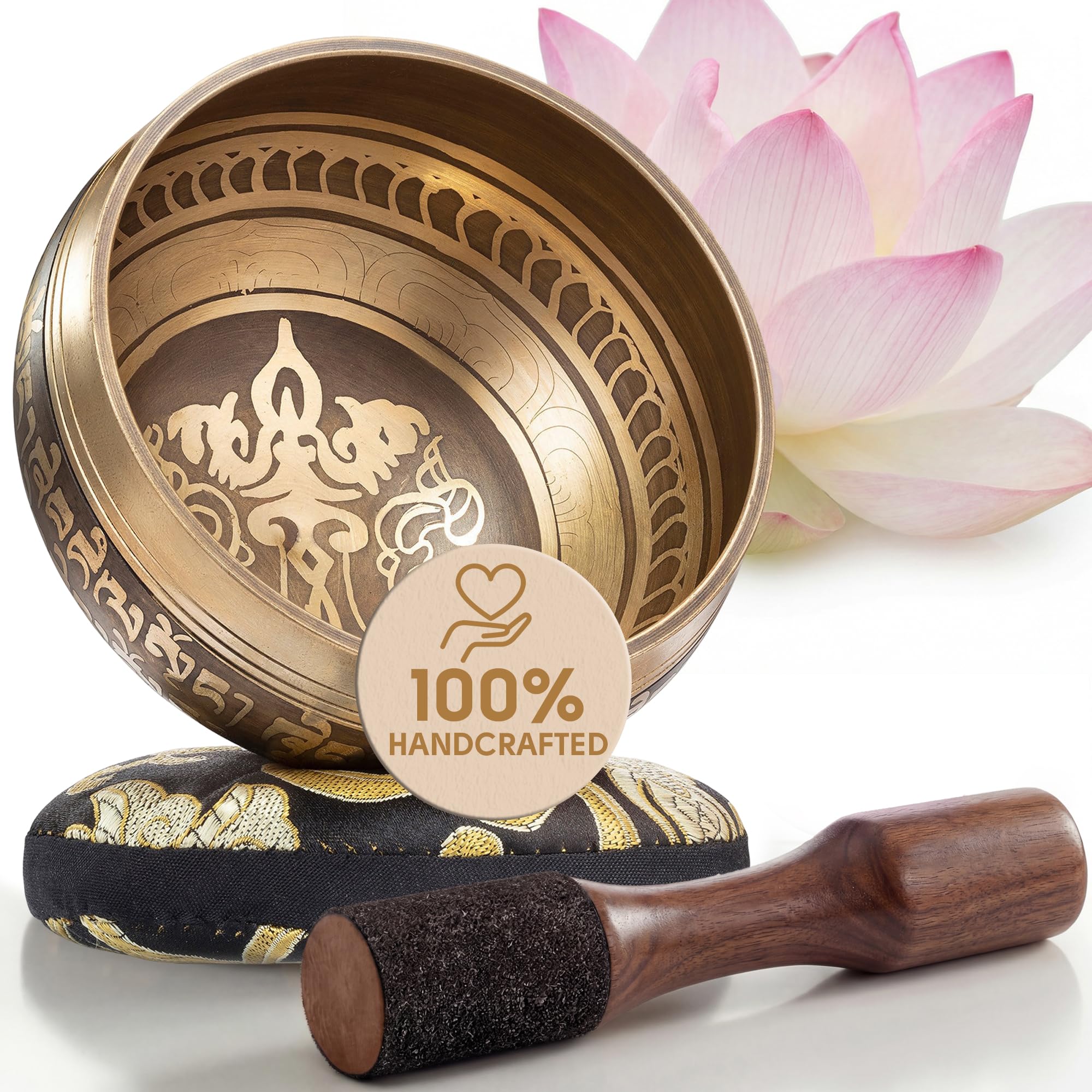
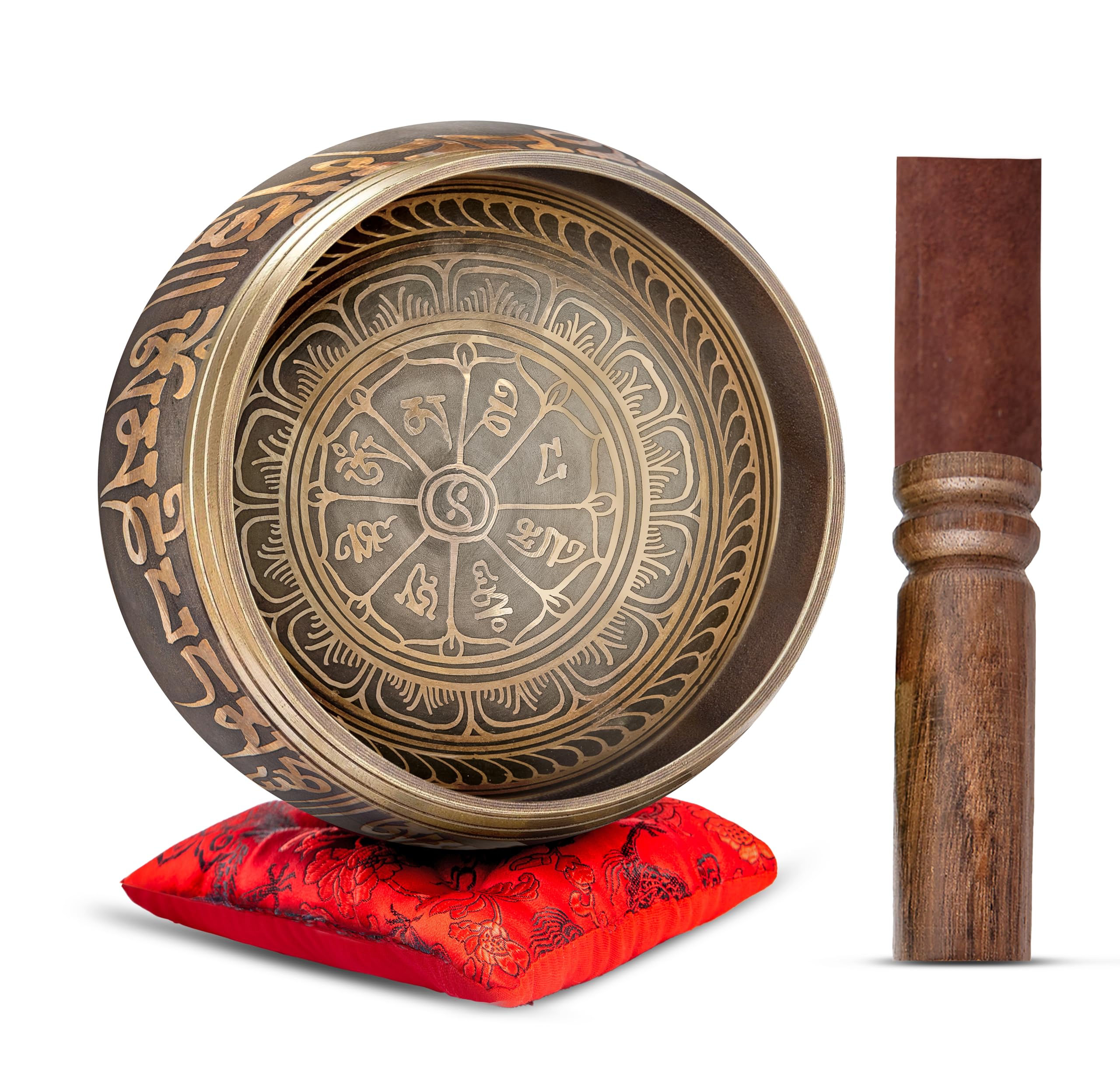
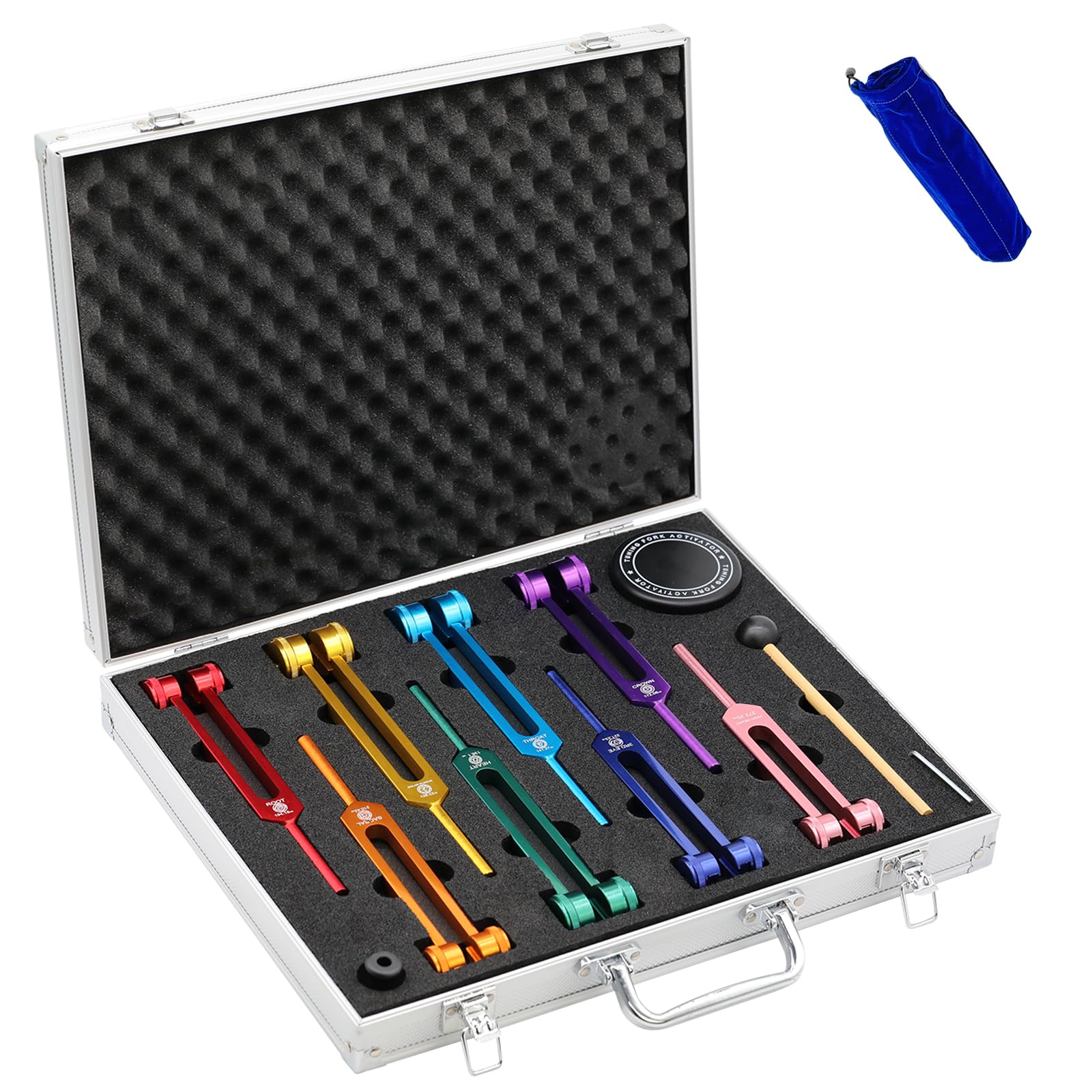
Sound healing isn’t one practice — a singing bowl and a set of tuning forks work in different ways and get used for different purposes, and neither one replaces the other. A bowl produces a broad, ambient, sustained tone that fills a room and is meant to be listened to; a tuning fork produces one exact, narrow frequency that’s meant to be applied more precisely, often close to or on the body.
A singing bowl is the easier place to start
Getting a genuinely sustained tone out of a bowl — running a mallet around the rim until it “sings” — takes real technique, and an entry-level bowl is deliberately made to be more forgiving of imperfect technique than a premium handmade one. Start with an easy-to-play set specifically so early practice sessions produce an actual tone instead of a frustrating scraping sound.
Upgrade the bowl once the technique clicks
A hand-hammered bowl has a more complex, layered tone than a machine-cast one — harmonics an entry-level bowl doesn’t produce — but that complexity is genuinely harder to draw out consistently. This is the upgrade to make once striking technique is no longer the limiting factor.
Tuning forks are a precision tool, not a bowl replacement
Where a bowl fills a room with one broad tone, a calibrated tuning fork produces one specific, exact frequency associated with a particular area of focus — struck against an activator and then held near or on the body rather than just listened to from across a room. It’s a genuinely different technique to learn, not a more advanced version of the same one.
Neither tool requires the other
A full sound healing practice can be built around just a bowl, just tuning forks, or both together — they’re not sequential purchases. Pick based on which technique actually interests you: an ambient tone you sit with, or precise, targeted frequency work.
(Product recommendations below. As an Amazon Associate I earn from qualifying purchases — see the disclosure at the bottom of this page.)