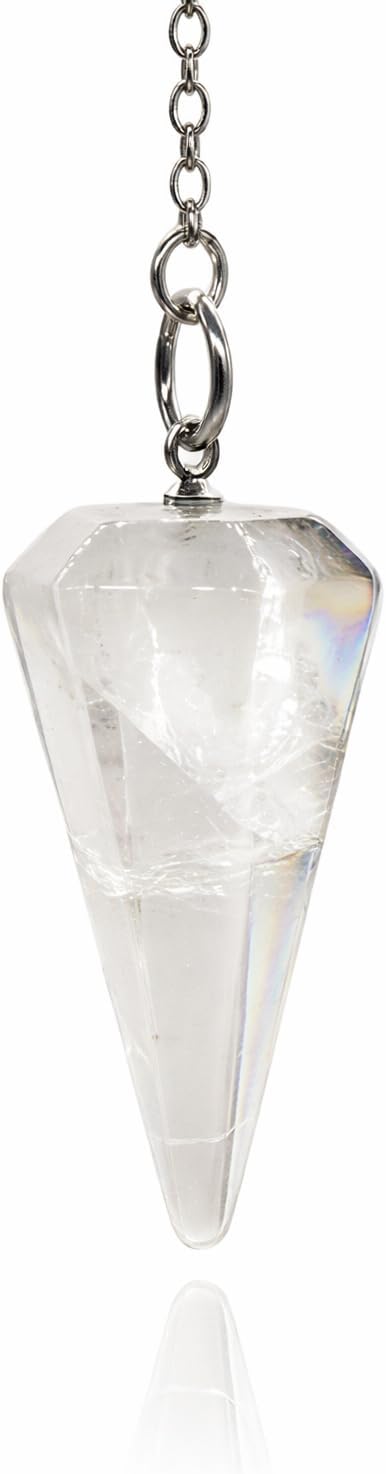
A pendulum needs almost nothing to start: some kind of small weight on a chain or string, and a chart or surface to hold it over. Everything sold in this space is really just a more refined, consistent version of that basic setup.
Calibrate before you interpret anything
Before using any chart, the actual first step is figuring out your own pendulum’s yes/no/maybe signals — for most people this means holding it still, asking it to show you “yes,” and watching which direction it swings (clockwise, side to side, etc.), then repeating for “no.” This is personal and not universal; skipping it and assuming clockwise always means “yes” is a common beginner mistake covered in the beginner’s guide above.
Free first, then the real pendulum
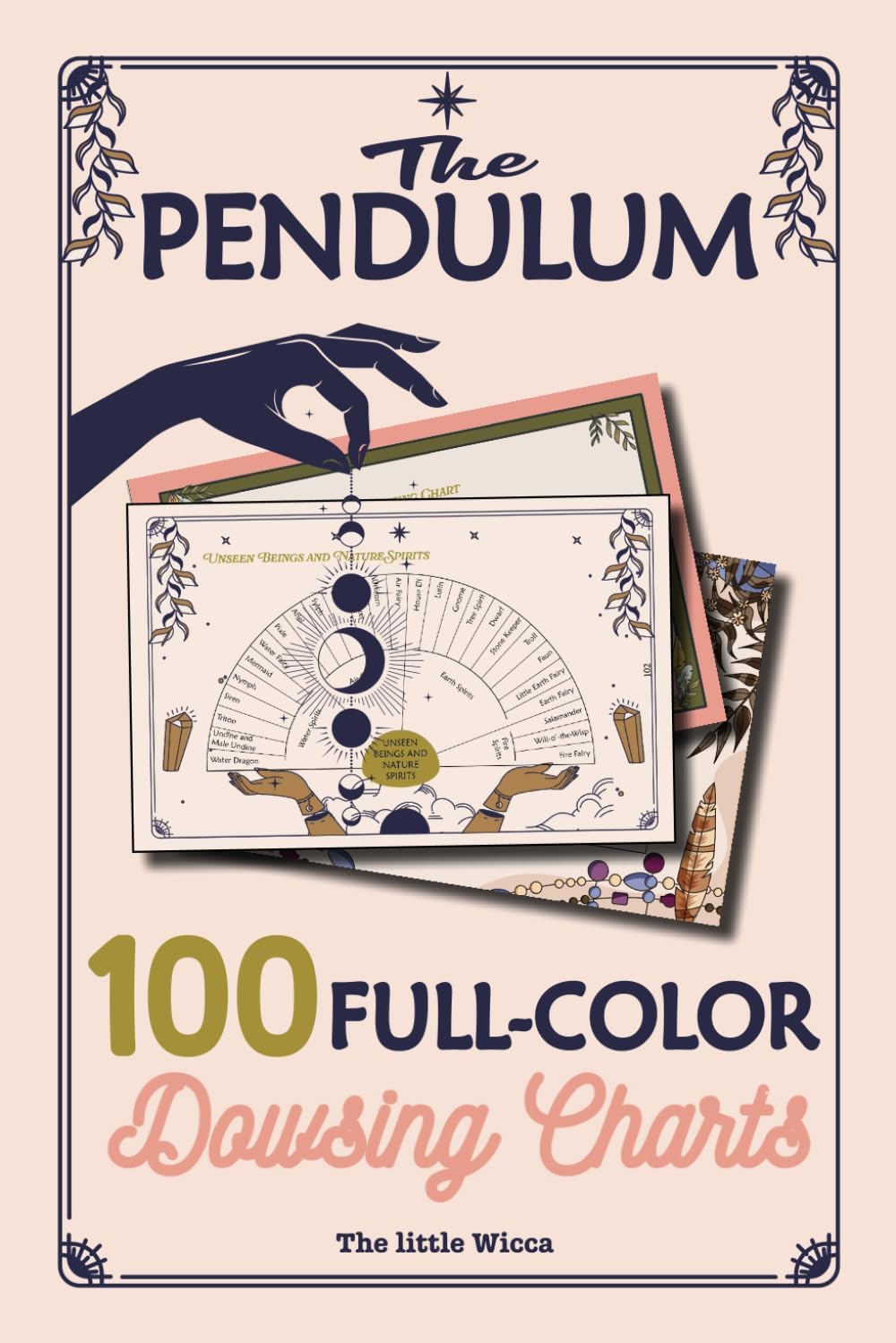
The printable chart above works with literally any small weighted object on a string — a necklace, a washer on thread, anything with some weight to it. There’s no reason to buy a crystal pendulum before finding out whether the practice itself holds your interest. Once it does, a proper weighted crystal pendulum swings more predictably than an improvised one, which matters once you’re trying to read subtle, small movements rather than obvious swings.
Worth being direct about
Like the rest of the content on this site, dowsing isn’t something with controlled scientific evidence behind it as a way of accessing outside information — the more grounded explanation for consistent-feeling results is the ideomotor effect, small unconscious muscle movements guided by what you already expect or believe. That doesn’t make the practice pointless. Plenty of people use a pendulum less as a literal information source and more as a structured way to surface what they already intuitively feel about a decision but haven’t consciously admitted to themselves yet — which is a genuinely useful function even under the more skeptical explanation.