The Kybalion is a short 1908 text, published anonymously under the name “Three Initiates,” that lays out seven principles it claims summarize Hermetic philosophy — a tradition tracing back (at least in name) to the legendary figure Hermes Trismegistus. It’s short enough to read in an afternoon, which is part of why it’s become the default entry point into Hermeticism for most people, whether or not that’s historically accurate to the actual ancient tradition.
The 7 principles, briefly
- Mentalism — “The All is Mind”; reality is fundamentally mental/consciousness-based.
- Correspondence — “As above, so below”; patterns repeat across different scales and domains.
- Vibration — Nothing rests; everything is in motion, vibrating at some rate.
- Polarity — Everything has an opposite, and opposites are really the same thing at different degrees.
- Rhythm — Everything moves in a natural back-and-forth cycle.
- Cause and Effect — Nothing happens by pure chance; everything has a cause.
- Gender — Masculine and feminine principles exist in everything, on physical and non-physical levels alike.
Worth being direct about
The Kybalion presents itself as an ancient teaching, but there’s no evidence it predates its actual 1908 publication — most historians treat it as an early-20th-century New Thought synthesis wearing older packaging, not a literal transcription of ancient Hermetic doctrine. That doesn’t make the ideas worthless; it means engaging with it as a philosophical framework someone can test against their own experience, rather than as a historical document whose authority rests on its claimed age.
Which edition actually matters
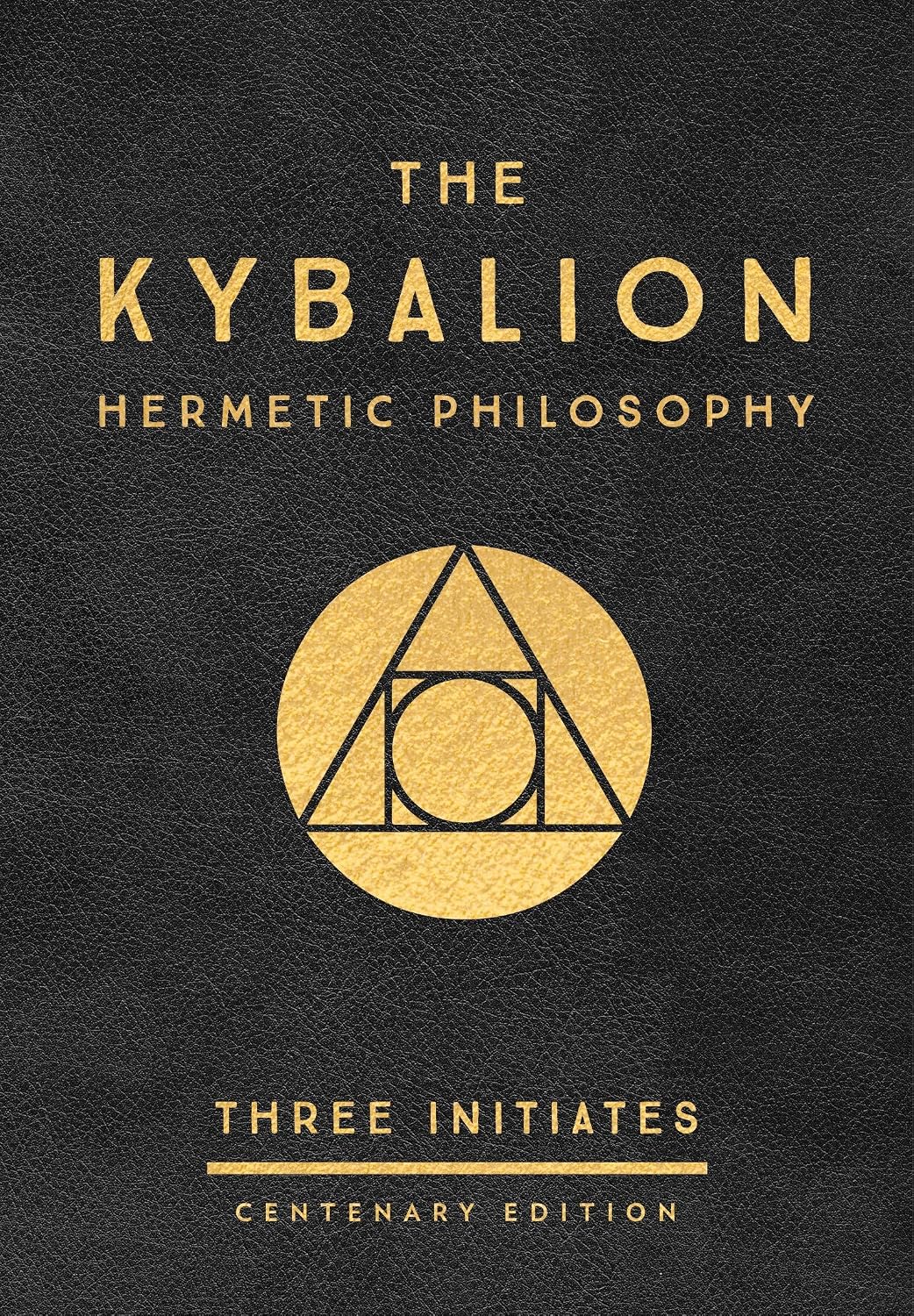
Because the original text is public domain, Amazon is flooded with reformatted reprints of wildly inconsistent quality — some missing sections, some riddled with OCR errors from bad scans. The Centenary Edition from Tarcher/Penguin is worth the extra couple of dollars over a $0.99 no-name reprint specifically to avoid that.